





5 Reasons Why Your Aussie Tap Water Isn't as Clean as You Think
5 Reasons Why Your Aussie Tap Water Isn't as Clean as You Think
Your water is "safe." But safe and clean are two very different things.


Australian tap water meets safety standards. But the ADWG only covers a limited set of parameters. Over 300 chemicals have been detected in tap water supplies. PFAS. Microplastics. Pharmaceutical residues. Disinfection by-products. Most aren't tested for at the tap. All are present.
Your tap water is treated. But it's not clean.
Australian water utilities test for a set number of parameters under the ADWG. That sounds thorough. But it doesn't cover the full picture.
Microplastics, pharmaceutical residues, chlorine by-products, fluoride at levels increasingly questioned. None of these are comprehensively monitored at the point of use. The water leaving the treatment plant may be compliant. What arrives at your tap has travelled through kilometres of ageing infrastructure.
Then there are the pesticides. Chlorothalonil — a fungicide banned by the EU in 2019 and classified as a probable carcinogen — is still detectable in 2025. Atrazine, banned in Australia for many uses, remains measurable in groundwater two decades on. Pesticides don't disappear when a regulation is signed. They persist for decades, and their breakdown products (metabolites) are often present, measurable, and simply not measured.
Australian water standards were written decades ago. Your water has changed. The rules haven't.
Your water company cleans the water. Nobody cleans the pipes.
Australia has thousands of kilometres of ageing water mains. Many installed over 50 years ago. In older suburbs of Sydney, Melbourne, Brisbane, and Adelaide, lead and copper service connections remain in use.
Lead dissolves into water silently. No taste. No smell. No colour change. The WHO says there is no safe level of lead exposure, particularly for children and pregnant women.
And in a country this vast, water often travels enormous distances through pipes before reaching households. The further it travels, the more chlorine is dosed to maintain disinfection, and the more opportunity for contamination along the way.
The water was clean when it left the plant. What it picks up on the way to your glass is a different story.

Most jug filters were designed for 1980s water. And they strip the good stuff out.
The standard supermarket jug filter. Plastic body. Plastic cartridge. A single layer of basic carbon. Designed when "filter" meant "make chlorine taste less obvious."
What a basic jug actually filters: chlorine taste. That's about it. PFAS, lead, fluoride, microplastics, pharmaceutical residues, pesticides — largely untouched.
Worse, the ones that do work harder tend to strip out the good stuff alongside the bad. Reverse osmosis systems and basic carbon filters reduce mineral content your body actually needs — calcium, magnesium, potassium — leaving you with flat, demineralised water.
A modern jug should do two things: remove what shouldn't be there, and keep (or restore) what should.
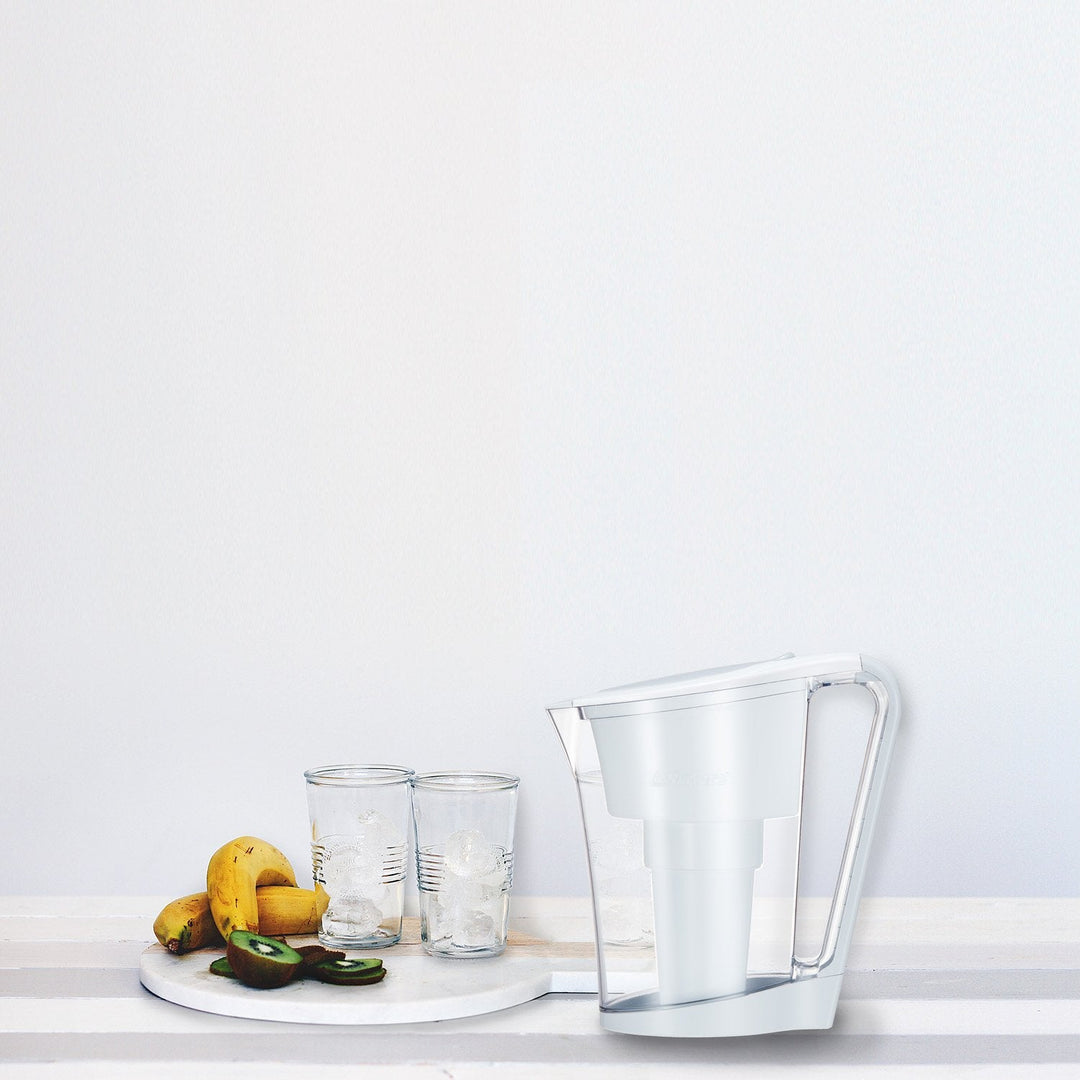
PFAS: the "forever chemicals" that never leave your body.
PFAS — per- and polyfluoroalkyl substances — earned the nickname "forever chemicals" because they don't break down. Not in soil. Not in water. Not in your body. Used in non-stick cookware, waterproof fabrics, food packaging and firefighting foam since the 1950s, they're now detected in the blood of virtually every person tested globally.
Australia has confirmed PFAS contamination in dozens of catchments — Williamtown in NSW, Oakey in Queensland, Katherine in the NT, and more recently in parts of the Blue Mountains drinking water supply that left thousands of households relying on bottled water.
In 2025 the ADWG dramatically tightened acceptable PFAS limits — by up to 250 times for some compounds. The fact that the limits needed cutting that hard tells you what was previously being signed off as "safe."
PFAS are linked to cancers, thyroid disease, hormone disruption and weakened immune response. And here's the part most people miss: standard municipal treatment doesn't remove them. PFAS pass through clarification, sedimentation, sand filtration and chlorination essentially unchanged. Only specialised filtration takes them out at the tap.
They're called forever chemicals for a reason. Once they're in the water, the only place left to stop them is in your kitchen.

98% of microplastics in your water are invisible, even to the tests.
Microplastics have been detected in 94% of tap water samples tested globally.
But 98% of those particles are smaller than 20 microns, below the official detection threshold set by the European Drinking Water Directive. The current regulatory framework simply doesn't measure them.
They're in the water. They pass through standard testing. And they end up in your glass.

This is why you need a multi-stage mineralising filter. Now.
The regulations will catch up. The testing will improve. But what's arriving in your glass every day hasn't changed yet.
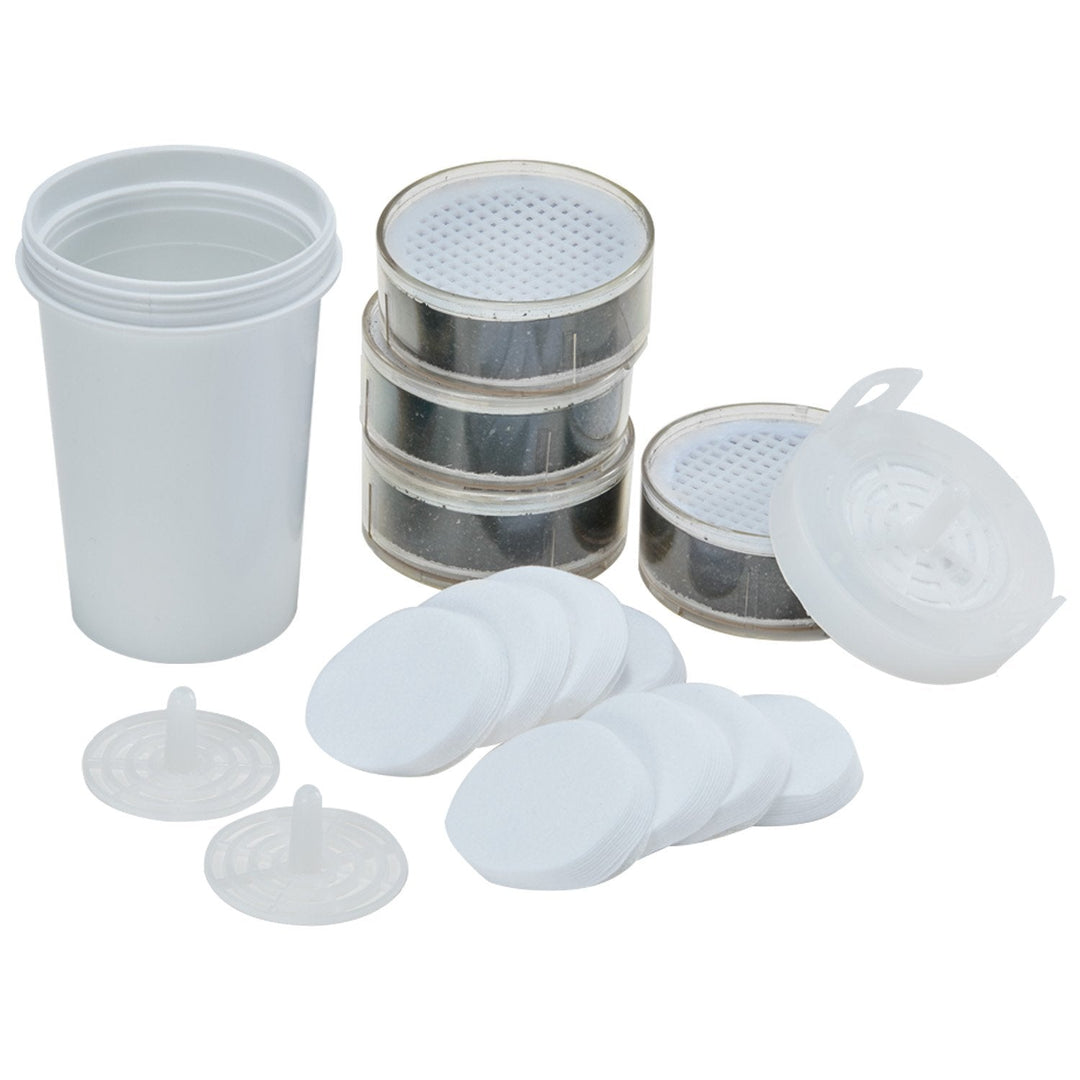
Revolutionary and evolutionary water filtration since 1984.
- Removes up to 99.9% of contaminants, including PFAS / forever chemicals, lead, fluoride, microplastics, pesticides and chlorine.
- Remineralises your water with around 60 bio-organic trace minerals — calcium, magnesium and potassium included.
- Alkaline pH 7.6 – 8.5. Smoother taste. The way water is supposed to feel.
- NSF*, ISO and CE certified. Independently lab-tested.
- 2-year / 4,800-litre filter life. Works out to roughly 3¢ per litre.
- BPA, BPB and BPS free construction. No plastic chemicals leaching into your water.
Subscribe & Save · Up to $40 Off
AceBio+ 1L Alkaline Mineral Water Filter Jug
$206.10 AUD $259 Save up to 20%
10 stages of filtration. Removes up to 99.9% of contaminants. Re-mineralises with ~60 trace minerals. Lifetime warranty. Made by Waters Co since 1984.
Shop AceBio+ Now →30-day satisfaction guarantee
Sources
- • National Health and Medical Research Council (2025). Australian Drinking Water Guidelines (ADWG) — updated PFAS guideline values.
- • Department of Climate Change, Energy, the Environment and Water (2025). PFAS National Environmental Management Plan.
- • CSIRO (2024). Water quality monitoring across Australian urban supply networks.
- • Kosuth, M. et al. (2018). "Synthetic polymer contamination in tap and bottled water." Frontiers in Chemistry.
- • Leslie, H.A. et al. (2022). "Discovery and quantification of plastic particle pollution in human blood." Environment International.
- • World Health Organization (2022). Lead in drinking-water: Health risks, monitoring and corrective actions.
Independently Certified By