






Benchtop vs. Under-Sink Water Filter: Which Is Right for You?
Benchtop vs. under-sink water filter is one of the most common decisions Australian households face when upgrading their drinking water. Both remove contaminants, both deliver cleaner water, but they work differently and suit different households. If you're choosing between a benchtop water filter and an under-sink system and trying to figure out which one fits your home, here's exactly what you need to know.
Key Takeaways
-
Benchtop water filters sit on your counter, need no plumbing, and work through gravity filtration.
-
Under-sink water filters install below the sink, require plumbing, and deliver filtered water through a dedicated tap.
-
Benchtop systems suit renters, households prioritising mineral-rich alkaline water, and moderate-volume users.
-
Under-sink systems suit high-volume households where flow rate and bench space matter most.
-
Both types, when certified and multi-stage, can remove up to 99.9% of contaminants including fluoride, PFAS, chlorine, and heavy metals.
-
Neither system uses electricity, putting both well ahead of electric alkaline ionisers on running costs.
-
Common contaminants in Australian tap water include fluoride (added at 0.6 to 1.0 mg/L in most states), residual chlorine, heavy metals including lead and arsenic, and PFAS contamination from industrial and agricultural runoff.
What Is a Benchtop Water Filter?
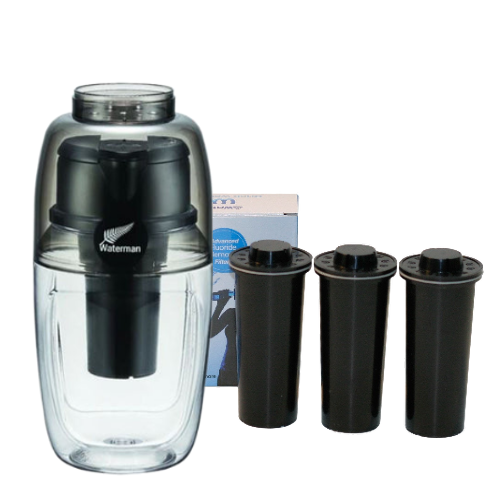
A benchtop water filter, also called a countertop water filter, sits on your kitchen counter and requires no plumbing. You pour tap water into the top chamber, it passes through multiple filtration stages, and filtered water collects in a reservoir below ready to drink. Quality multi-stage systems remove up to 99.9% of contaminants including fluoride, PFAS, heavy metals, and chlorine, then infuse bio-available minerals to produce alkaline mineralised water. No electricity, no plumber, and filtered water at under 3 cents per litre.
Pros:
-
No installation or plumbing required
-
Produces alkaline mineralised water with bio-available minerals
-
Moves with you if you relocate
-
Easy to set up and maintain
-
Suits renters and homeowners alike
Cons:
-
Takes up bench space
-
Gravity-fed, so slower flow than a tap
-
Needs regular refilling
What Is an Under-Sink Water Filter?
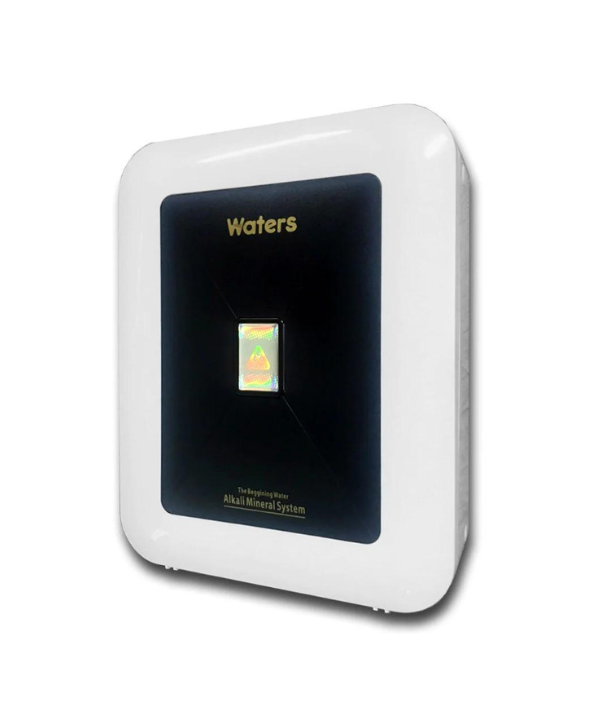
An under sink water filter connects directly to your cold-water supply line and delivers filtered water through a dedicated tap. The system sits inside the cabinet below, keeping your bench completely clear. Premium certified systems remove up to 99.9% of contaminants. Installation typically requires a licensed plumber, costing $150 to $400, and renters will need landlord approval. Most reverse osmosis under-sink systems also strip beneficial minerals from the water alongside contaminants.
Pros:
-
Keeps bench space completely clear
-
Delivers water at full tap pressure, around 2 to 4 litres per minute
-
Good option for high-volume households
-
Permanent installation with no daily refilling
Cons:
-
Requires plumbing work and usually a licensed tradesperson
-
Not suitable for most renters
-
Most RO systems remove beneficial minerals
-
Higher upfront cost including installation
Benchtop vs. Under-Sink: Key Differences
Installation
Benchtop: No installation needed. Place it on the counter, pour in tap water, and you're done. No plumber, no tools, nothing to change in your home.
Under-sink: You'll need to cut into your water supply line and fit a dedicated tap. Most households need a licensed tradesperson for this, which typically costs $150 to $400. If you rent, you'll need written landlord approval before any plumbing work, which rules out under-sink systems for most renters.
Filtration Performance
Benchtop: Each filtration stage targets a specific contaminant. A quality certified benchtop system removes up to 99.9% of contaminants including fluoride, PFAS, heavy metals, chlorine, and bacteria. If fluoride is a concern, it's worth reading about how to remove fluoride from water before you buy.
Under-sink: Premium under-sink water filters can filter just as much as benchtop water filters can. But cheaper single-stage systems often only tackle chlorine and sediment, leaving fluoride, PFAS, and heavy metals untouched. Always check what the system is actually certified to remove.
Mineral Content and pH
Benchtop: After filtering out contaminants, quality multi-stage systems put bio-available minerals back into the water and raise the pH to alkaline levels. You get mineralised alkaline water, not flat stripped water.
Under-sink: Most reverse osmosis systems remove minerals along with contaminants. Some premium models add a remineralisation stage, but that's not standard. Check the specs before assuming you're getting mineralised water.
Flow Rate
Benchtop: Gravity-fed, so it's slower than a tap. It handles moderate daily use comfortably, but households that get through a lot of water each day may find themselves waiting for the reservoir to refill.
Under-sink: Delivers water at full tap pressure, around 0.75 to 4 litres per minute. If you cook with filtered water or your household goes through 5 litres or more a day, that on-demand flow makes a real difference.
Bench Space
Benchtop: Takes up roughly 20 to 30cm of counter space. Glass reservoir models can look attractive sitting out, but they do take up room on your bench.
Under-sink: Sits entirely inside the cabinet under the sink. Your bench stays completely clear, which suits smaller kitchens or anyone who prefers a tidy countertop.
Cost
Benchtop: Typically costs between $200 and $1,000 upfront with no installation fees. Replacement filters last 6 to 12 months and cost around $80 to $150 per year. No tradesperson costs, ever.
Under-sink: The unit costs $150 to $1000, plus $150 to $400 for installation, so your total upfront spend can reach $1,200. Cartridge sets run $40 to $100 per set, and multi-stage systems often use two or three separate cartridges, so annual costs can add up.
Both work out to around 3 cents per litre. When you compare filtered water to bottled water, bottled water costs 300 to 500 times more per litre and creates significantly more plastic waste.
Benchtop vs. Under-Sink: Side-by-Side
|
Benchtop |
Under-Sink |
|
|
Installation |
None required |
Plumbing work needed |
|
Suitable for renters |
Yes |
No, in most cases |
|
Flow rate |
Slower, gravity-fed |
Fast, tap pressure |
|
Mineral enrichment |
Yes, bio-available minerals |
No, RO strips minerals |
|
Bench space used |
20 to 30cm |
None |
|
Upfront cost |
$200 to $1000 |
$150 to $1,200+ with installation |
|
Ongoing cost |
$80 to $150 per year |
$40 to $300 per year |
|
Cost per litre |
Under 3 cents |
Under 3 cents |
|
Contaminant removal |
Up to 99.9% |
Up to 99.9% (varies by model) |
|
Moves with you |
Yes |
No |
What to Look For When Buying a Water Filter
Not all water filters are equal. Here's what to check before you buy.
Certifications
Look for filters certified under recognised international standards:
-
NSF/ANSI Standard 42: Covers chlorine taste and odour. The minimum standard for any filter worth buying.
-
NSF/ANSI Standard 53: Covers health-related contaminants including lead, heavy metals, and chloramines.
-
NSF/ANSI Standard 58: Covers reverse osmosis systems.
-
ISO, EPA, and CE: Additional independent verification of performance and manufacturing standards.
If a filter doesn't list its certifications clearly, don't buy it.
-
Third-party testing: Manufacturer claims aren't enough. Look for independent laboratory verification.
-
Contaminant coverage: Check which specific contaminants the filter removes. Chlorine and sediment are the baseline. Review your local water quality report for anything beyond that.
-
Filter lifespan: Calculate the annual replacement cost, not just the upfront price. Quality cartridges last 6 months to 4 years.
-
Warranty: A lifetime warranty signals genuine product confidence. Short warranties on a long-term daily use product are worth questioning.
-
Flow rate: Gravity-fed benchtop filters suit moderate use. High-volume households benefit from the faster flow of an under-sink system.
-
Mineral enrichment: Check whether the system remineralises after filtration. Reverse osmosis strips everything out. Multi-stage systems that add minerals back produce more balanced water.
Which One Is Right for You?
Choose a Benchtop Filter If
-
You rent and can't modify plumbing
-
Alkaline mineralised water with bio-available minerals matters to your health goals
-
You want a system that moves with you if you relocate
-
You want no installation cost or tradespeople involved
-
Your household has moderate daily water consumption
-
You want filtration verified to ISO, NSF, CE, FDA, and EPA standards without plumbing
Choose an Under-Sink Filter If
-
You own your home and are comfortable with plumbing work
-
Your household consumes 5 litres or more of filtered water per day
-
You want to keep your bench completely clear
-
Flow rate at full tap pressure is important for cooking and high-volume use
-
Mineral enrichment and alkaline pH are not priorities for your household
Waters Co Australia: What We Offer
Waters Co Australia has been helping Australian families access cleaner water since 1984. All systems carry ISO, NSF, CE, EPA, and FDA certifications with independent third-party testing. Every system comes with a lifetime warranty and the cost works out to around 3 cents per litre.
BIO 500: 13-Stage Benchtop Filter (5.25L)
A gravity-fed benchtop water filter with 13 stages of filtration and activation. Removes up to 99.9% of contaminants including fluoride, PFAS, heavy metals, chlorine, and bacteria. Produces alkaline mineral water at pH 7.6 to 8.5 with over 60 bio-available trace minerals. BPA-free with a hand-blown silica glass reservoir. Filter life up to 12,000 litres or 3 years.
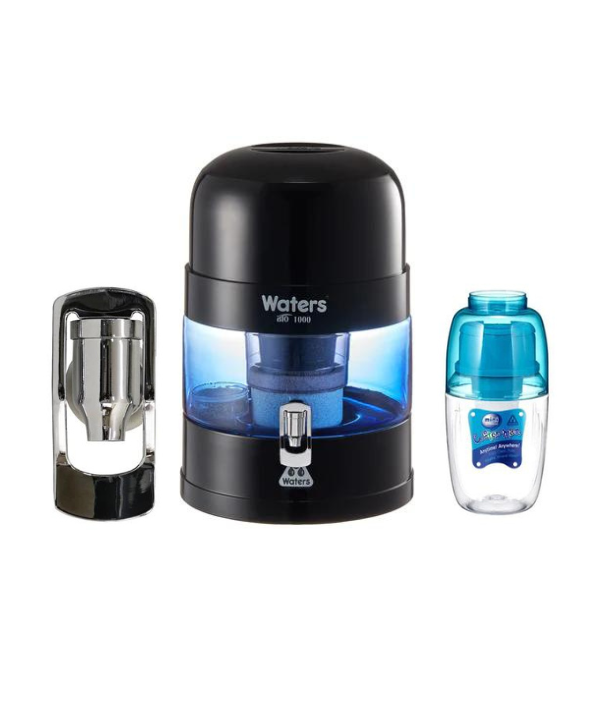
BIO 1000: 15-Stage Benchtop Filter (10L)
The same proven technology as the BIO 500 with 15 stages of filtration and a larger 10 litre capacity, making it ideal for families and workplaces. Removes up to 99.9% of contaminants, produces alkaline mineral water at pH 7.6 to 8.5 with over 60 bio-available trace minerals. Filter life up to 12,000 litres or 4 years. BPA-free with a hand-blown silica glass reservoir.
BioMax: 4-Stage Under-Sink Filter
The BioMax delivers filtered water directly from your tap with no bench space required. 4-stage filtration removes up to 99.9% of fluoride, PFAS, heavy metals, microplastics, chlorine, and pathogens. Produces alkaline mineral water at pH 7.6 to 8.5 with over 60 bio-available trace minerals. Filter life up to 10,000 litres or 1.5 to 3 years. Suitable for DIY installation. Note: tap/faucet not included.
Frequently Asked Questions
Do benchtop filters work as well as under-sink filters?
Yes, when certified and multi-stage. Quality benchtop systems remove up to 99.9% of contaminants including fluoride, PFAS, heavy metals, and chlorine. The main difference is flow rate and mineral enrichment, not filtration effectiveness.
Can renters use an under-sink water filter?
In most cases no. Under-sink installation requires modifying the plumbing, which needs landlord approval and usually a licensed plumber. A benchtop filter is the practical option for renters as it requires no installation and moves with you when you leave.
Do under-sink filters remove minerals from water?
Most reverse osmosis under-sink systems do remove minerals along with contaminants. Quality benchtop multi-stage systems take the opposite approach, infusing bio-available minerals back into the water after filtration.
How much does it cost to install an under-sink water filter in Australia?
Professional installation typically costs $150 to $400 depending on your cabinetry and plumbing access. This is on top of the unit cost of $300 to $800, meaning total upfront spend can reach $1,200.
What contaminants are common in Australian tap water?
Fluoride is added at around 0.6 to 1.0 mg/L in most Australian states. Residual chlorine is present in all municipal supplies. Heavy metals including lead and arsenic have been detected in some areas, and PFAS contamination from industrial and agricultural runoff is a documented concern in parts of Australia.
Which is cheaper long term, benchtop or under-sink?
Over five years, total cost of ownership reaches rough parity for most Australian households. Both deliver water at under 3 cents per litre. The difference is upfront, where benchtop systems have no installation cost and lower initial outlay.