





Benchtop vs. Water Filter Jug
Deciding between a benchtop water filter and water filter jug? We’ve got you. Both sit on your counter, both improve your water, but they are not the same thing. If you're looking at water filters and trying to decide which format is worth your money, here's exactly what you need to know.
Key Takeaways
-
Benchtop water filters use multi-stage filtration of up to 15 stages, removing fluoride, PFAS, heavy metals, and bacteria.
-
Standard water filter jugs use single or dual-stage carbon filtration that improves taste and reduces chlorine but does not reliably remove fluoride or PFAS.
-
Benchtop filters produce alkaline mineralised water with over 60 bio-available minerals. Jugs add nothing back after filtration.
-
Benchtop filters cost under 3 cents per litre. Jug filters typically run 5 to 10 cents per litre once cartridge replacements are factored in.
-
Common contaminants in Australian tap water include fluoride, residual chlorine, heavy metals including lead and arsenic, and PFAS from industrial and agricultural runoff.
-
The gap between these two formats is not about convenience. It's about what each filter actually removes.
What Is a Benchtop Water Filter?
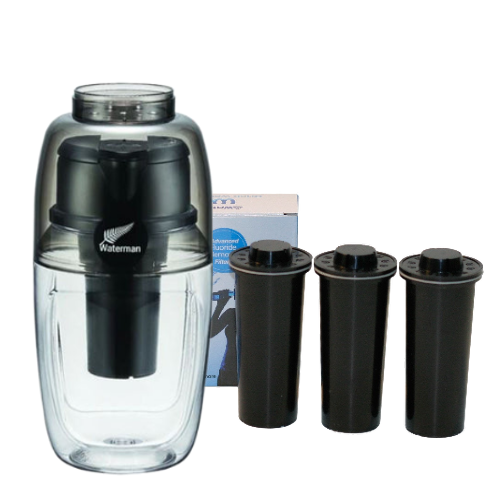
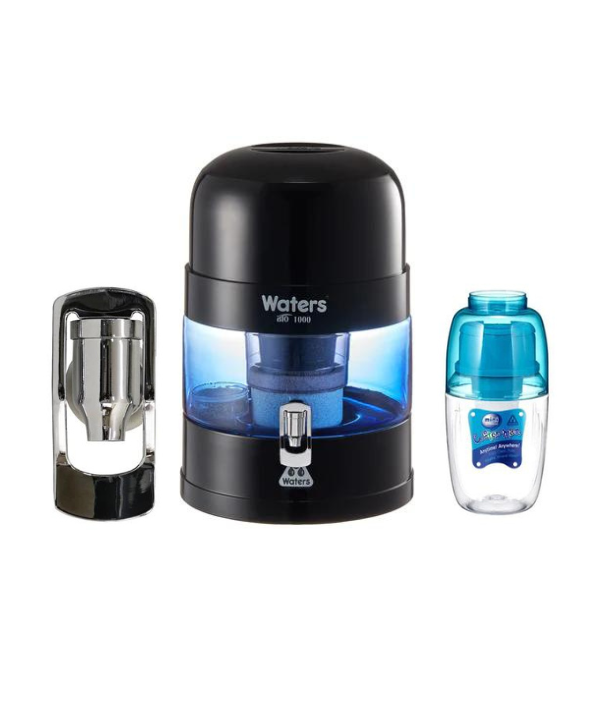
A benchtop water filter sits on your kitchen counter and requires no plumbing. You pour tap water into the top chamber, it passes through multiple filtration stages, and filtered water collects in a reservoir below ready to drink.
Some of the best benchtop water filters have multi-stage systems that remove up to 99.9% of contaminants including fluoride, PFAS, heavy metals, and chlorine, then infuse bio-available minerals to produce alkaline mineralised water. No electricity, no plumber, and filtered water at under 3 cents per litre.
Pros:
-
Removes up to 99.9% of contaminants including fluoride, PFAS, and heavy metals
-
Produces alkaline mineralised water with over 60 bio-available minerals
-
No installation or plumbing required
-
Lower cost per litre than jugs over time
-
Suits renters and homeowners alike
Cons:
-
Takes up bench space
-
Gravity-fed, so slower than a tap
-
Needs regular refilling
What Is a Water Filter Jug?
A water filter jug is a portable pitcher with a built-in filter cartridge. You fill it from the tap, water passes through one or two stages of activated carbon, and filtered water collects in the lower chamber ready to pour. Most jugs like Brita reduce chlorine (but don’t remove it entirely), improve taste, and cut odour. They are compact, fridge-friendly, and require no installation.
What most jugs don't do is remove fluoride, PFAS, or heavy metals. Standard carbon media is not designed to capture these contaminants. Unless the jug is specifically certified for fluoride or PFAS removal, those pass straight through untreated.
Pros:
-
Compact and portable, fits inside a fridge
-
No installation required
-
Low upfront cost
-
Good for renters and temporary housing
Cons:
-
Most do not remove fluoride, PFAS, or heavy metals
-
Higher cost per litre than benchtop over time
-
Adds nothing back to the water after filtration
-
Cartridges need replacing every 1 to 3 months
Benchtop vs. Water Filter Jug: Main Differences
Filtration Performance
Benchtop: A quality benchtop system runs your water through up to 15 separate stages, each one targeting a different contaminant. You get up to 99.9% removal of fluoride, PFAS, heavy metals, chlorine, and bacteria.
If fluoride is something you're particularly worried about, it's worth reading about how to remove fluoride from water before you decide.
Jug: Most jugs use one or two stages of activated carbon. That's enough to reduce chlorine and improve the taste of your water, but it won't remove fluoride, PFAS, heavy metals, or bacteria.
Unless your jug is specifically certified under NSF/ANSI Standard 53 for those contaminants, they pass straight through. Most jugs you'll find in stores don't hold that certification.
Mineral Content and pH
Benchtop: After filtering out the bad stuff, quality multi-stage systems put over 60 bio-available minerals back into your water and raise the pH to between 7.6 and 8.5. What comes out is alkaline mineralised water, not flat, stripped water.
Jug: Most jugs filter and stop there. Your water comes out cleaner but no minerals are added back and the pH stays the same. Some specialist jugs do include a mineralisation stage, but that's the exception not the rule. Check the specs if that matters to you.
Cost Per Litre
Benchtop: Works out to under 3 cents per litre over the lifetime of the filter, with just one or two cartridge replacements per year.
Jug: Typically costs you 5 to 10 cents per litre once you factor in replacing the cartridge every one to three months. That adds up quickly. And if you're still buying bottled water, that's 300 to 500 times more per litre than either option.
Replacement Frequency and Maintenance
Benchtop: Cartridges last 6 to 12 months, with some premium filters going up to 4 years. You're replacing it once or twice a year at most.
Jug: Cartridges need replacing every 1 to 3 months, so you're doing it 4 to 12 times a year. It's not complicated, but it does add up in both time and cost.
Environmental Impact
Benchtop: With only 1 to 2 cartridge replacements per year, you're generating very little plastic waste compared to most alternatives.
Jug: Over five years a jug household discards 20 to 60 plastic cartridges. The lower upfront cost comes with a higher long-term environmental footprint.
Portability
Benchtop: Sits on your counter and stays there. It takes up roughly 20 to 30cm of bench space and isn't designed to move around.
Jug: Fits in the fridge, travels easily, and works well in temporary or shared housing. If you need something even more portable, a portable water filter is worth looking at as a third option.
Benchtop vs. Water Filter Jug: Quick Comparison
|
Benchtop |
Water Filter Jug |
|
|
Filtration stages |
Up to 15 |
1 to 2 |
|
Removes fluoride |
Yes, up to 99.9% |
No, unless specialist-rated |
|
Removes PFAS |
Yes |
No |
|
Removes heavy metals |
Yes, up to 99.9% |
No |
|
Removes chlorine |
Yes |
Yes |
|
Mineral enrichment |
Yes, 60+ bio-available minerals |
No |
|
Alkaline pH |
Yes, 7.6 to 8.5 |
No |
|
Cost per litre |
Under 3 cents |
5 to 10 cents |
|
Cartridge life |
6 months to 4 years |
1 to 3 months |
|
Portability |
Counter-based |
Fridge-friendly |
|
Installation |
None required |
None required |
What to Look For When Buying a Water Filter
Not all water filters are equal. Here's what to check before you buy.
Certifications
Look for filters certified under recognised international standards:
-
NSF/ANSI Standard 42: Covers chlorine taste and odour. The minimum standard for any filter worth buying.
-
NSF/ANSI Standard 53: Covers health-related contaminants including fluoride, lead, heavy metals, and chloramines.
-
NSF/ANSI Standard 58: Covers reverse osmosis systems.
-
ISO, EPA, and CE: Additional independent verification of performance and manufacturing standards.
If a filter doesn't list its certifications clearly, don't buy it.
-
Third-party testing: Manufacturer claims aren't enough. Look for independent laboratory verification.
-
Contaminant coverage: Check which specific contaminants the filter removes. Chlorine and sediment are the baseline. Review your local water quality report for anything beyond that.
-
Filter lifespan: Calculate the annual replacement cost, not just the upfront price. Quality cartridges last 6 months to 4 years.
-
Warranty: A lifetime warranty signals genuine product confidence. Short warranties on a long-term daily use product are worth questioning.
-
Mineral enrichment: Check whether the system remineralises after filtration. Multi-stage systems that add minerals back produce more balanced, better-tasting water.
Which One Is Right for You?
Choose a Benchtop Filter If
-
Fluoride, PFAS, or heavy metals are a concern for your household
-
You want alkaline mineralised water with bio-available minerals
-
You want the lowest cost per litre over time
-
Your household drinks more than 2 litres of filtered water per day
-
You want filtration verified to ISO, NSF, CE, FDA, and EPA standards
Choose a Water Filter Jug If
-
You rent or live in temporary housing and need maximum flexibility
-
Chlorine taste and odour are your only concern
-
You want a low upfront cost with no bench space commitment
-
You need something portable that fits in the fridge
Waters Co Australia: What We Offer
Waters Co Australia has been helping Australian families access cleaner water since 1984. All systems carry ISO, NSF, CE, EPA, and FDA certifications with independent third-party testing. Every system comes with a lifetime warranty and water works out to around 3 cents per litre.
BIO 500: 13-Stage Benchtop Filter (5.25L)
A gravity-fed benchtop water filter with 13 stages of filtration and activation. Removes up to 99.9% of contaminants including fluoride, PFAS, heavy metals, chlorine, and bacteria. Produces alkaline mineral water at pH 7.6 to 8.5 with over 60 bio-available trace minerals. BPA-free with a hand-blown silica glass reservoir. Filter life up to 12,000 litres or 3 years.
BIO 1000: 15-Stage Benchtop Filter (10L)
The same proven technology as the BIO 500 with 15 stages of filtration and a larger 10 litre capacity, making it ideal for families and workplaces. Removes up to 99.9% of contaminants, produces alkaline mineral water at pH 7.6 to 8.5 with over 60 bio-available trace minerals. Filter life up to 12,000 litres or 4 years. BPA-free with a hand-blown silica glass reservoir.
AceBIO+: 10-Stage Filter Jug (1L)
A compact, portable filter jug with 10 stages of filtration and activation. Removes up to 99% of contaminants including fluoride, PFAS, heavy metals, chlorine, and bacteria, then infuses over 60 bio-organic trace minerals to produce alkaline mineral water at pH 7.6 to 8.5. BPA/BPB/BPS-free construction. Filter life up to 4,800 litres or 24 months. Perfect for your home, workplace, or travel.
Frequently Asked Questions
Does a water filter jug remove fluoride?
Most standard jugs do not. Activated carbon, which most jugs use, cannot capture fluoride ions. You need a jug specifically certified under NSF/ANSI Standard 53 for fluoride removal, or a multi-stage benchtop system.
Is a benchtop water filter better than a jug?
For contaminant removal, yes. Benchtop multi-stage systems remove up to 99.9% of fluoride, PFAS, heavy metals, and bacteria. Most standard jugs cover chlorine taste and odour only. The trade-off is bench space and a higher upfront cost.
How often do you replace a water filter jug cartridge?
Most jug cartridges need replacing every 1 to 3 months depending on your water quality and household usage. Benchtop filter cartridges last 6 months to 4 years.
What is the cost per litre of a benchtop filter vs. a jug?
Benchtop filters cost under 3 cents per litre. Most jug filters run 5 to 10 cents per litre once you factor in frequent cartridge replacements.
Do benchtop filters need installation?
No. Benchtop filters sit on your counter, require no plumbing, and work through gravity. Setup takes minutes.
What contaminants are common in Australian tap water?
Fluoride is added at around 0.6 to 1.0 mg/L in most Australian states. Residual chlorine is present in all municipal supplies. Heavy metals including lead and arsenic have been detected in some areas, and PFAS contamination is a documented concern in parts of Australia.